Showing posts with label climate. Show all posts

Friday, 10 January 2014

What do tipping points mean to us?

As discussed in previous posts, tipping points are a concern for scientists and policy-makers due to the threat they pose to natural resources, ecosystem services and human well-being (Werners et al. 2013). Societies and economies across the globe are reliant on climate and ecosystem services in order for their current success, and also for that of future generations (Folke, C. 2006). Despite our dependence on natural resources, uncontrolled usage amongst other factors has depleted resources, whilst changing the composition of the atmosphere through emissions of greenhouse gases and enhancing global climate change. Climate change is only one of the challenges the global community faces today in terms of continuing development at a sustainable rate.

Werners et al. (2013) state that “climate change shifts the challenge for sustainability from preserving natural resources for future generations to strengthening resilience and adaptive capacity in social–ecological systems”. This means that policy making and resources management must change from a conservation basis to one that manages change and adaptation (Werners et al. 2013). Thresholds and tipping points, along with their properties and mechanisms, are important points for sustainability science, and their uncertainty is a big challenge when trying to remain sustainable.

Previous posts have mentioned that some systems have an indicator of change, if examined closely, which allows us either to mitigate against the changes or to prevent them from occurring where possible.  Biggs et al. (2009) found that if drivers of a system can only be manipulated gradually, action is needed much before a regime shift in order to prevent it, but if drivers can be rapidly altered, the action aversive action can be delayed until a shift is underway. However, these large, noticeable increases in the indicators only tend to occur once a regime shift has started, which is usually too late for human intervention to avert a shift (Biggs et al. 2009). Huntington et al. (2012) out into perspective the challenge we face and what it means for the average human:  “rapid sea level rise, for example from accelerated melting of the Greenland ice sheet, will create a choice between protection and abandonment for coastal regions throughout the world, a potential global tipping point” (Huntington et al. 2012).

Climate change is a challenge that most, if not all, governments cannot stretch to financially, and thus beyond a point, individuals must bear the costs or adapt to new circumstances, creating political-economic tipping points in countries everywhere (Huntington et al. 2012). The scale of the battle ahead depends largely on greenhouse gas emissions reductions, with temperature increase being a trigger for many of the fragile Earth systems responses. With many of the tipping points unknown, and the amplifying feedbacks and time-lag effects in systems underestimated (Werners et al. 2013), the challenge ahead is vast.

Biggs, R. S. R. Carpenter and W. A. Brock (2009) “Turning back from the brink: Detecting an impending regime shift in time to avert it” PNAS, 106, 3, 826–831
Folke, C.(2006) “Resilience: The emergence of a perspective for social–ecological systems analyses” Global Environmental Change 16, 253–267
Huntington, H.,P., E. Goodstein and E. Euskirchen (2012) “Towards a tipping point in responding to change: rising costs, fewer options for Arctic and global societies” Ambio. 41, 1, 66-74

Werners, S., E., S. Pfenninger, E. van Slobbe, M. Haasnoot, J. H Kwakkel and R. J. Swart, (2013) “Thresholds, tipping and turning points for sustainability under climate change” Current Opinion in Environmental Sustainability, 5, 334–340

Friday, 27 December 2013

Decline of the Mammals

There has been much debate about the cause of mass extinctions at the last major global climate upheaval: the Holocene glacial to interglacial transition (Lister and Stuart, 2008). Vegetational belts and mammalian communities underwent major reorganisation, with many large mammals becoming extinct, and causality arguments generally revolve around a joint cause of human and climate. Evidence of these extinctions can be found from palaeontology, climatology, archaeology and ecology, using radiocarbon dating to temporally place each piece of evidence (Barnosky et al. 2004). Barnosky et al. (2004) detail how there is strong evidence for human induced population shifts and extinctions, but that climate change also plays a significant if not dominant role in all or some of the scenarios.
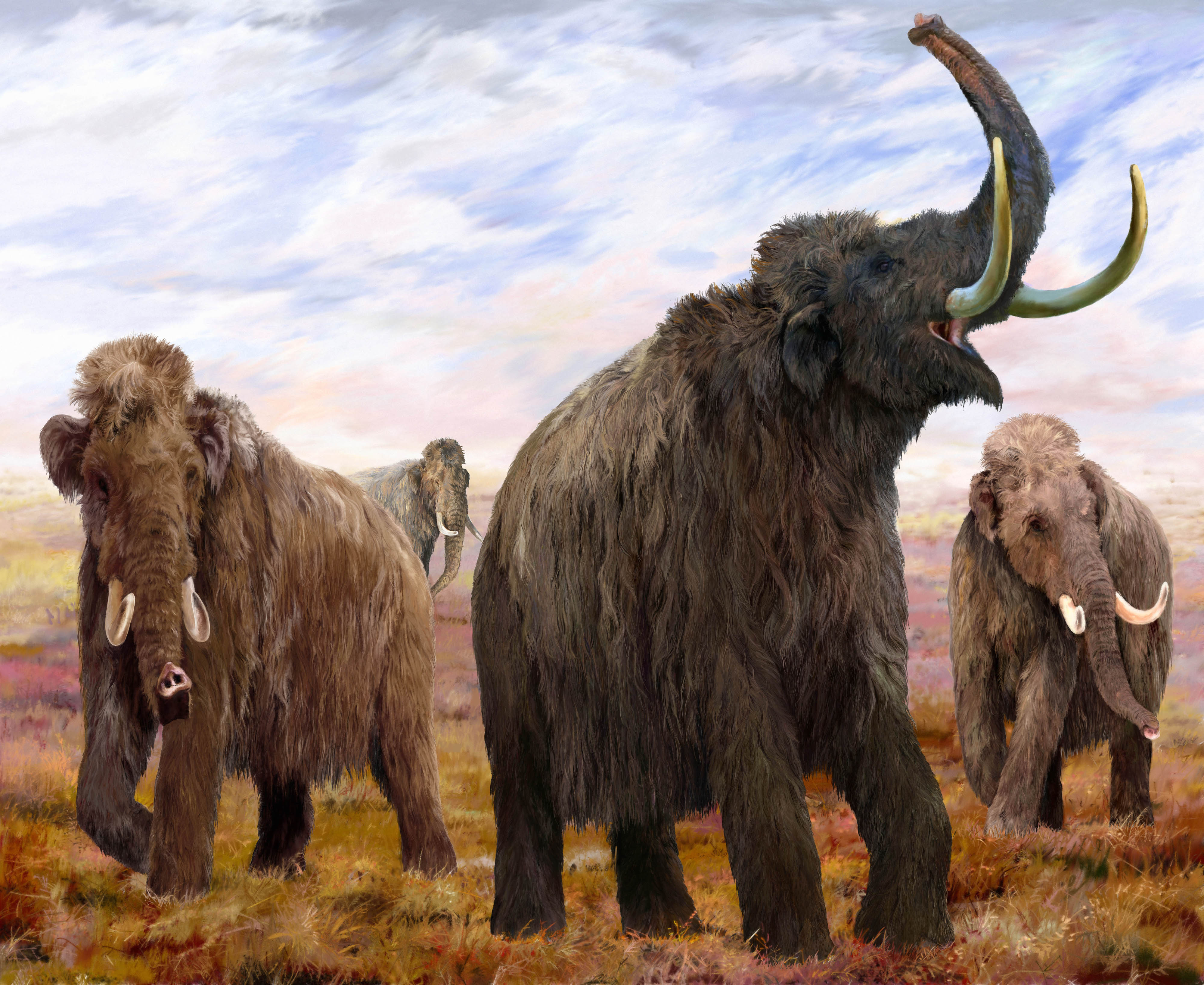
From: http://trueunknown.files.wordpress.com/2012/03/mammoths_wooly.jpg

The woolly mammoth (Mammuthus primigenius) is one of the better studied large mammals as an example of mass extinction. Sher (1997) proposed a ‘retreat to the north’ in Eurasia, where distribution of mammoths steadily contracted, until mammoth were restricted to Northern Siberia around 12 ka BP before finally becoming extinct. Stuart et al. (2002) researched further into this, and found this model to be fitting but to overlook the complexity of the pattern of extinction. They suggest, for example, absence and then re-colonization of the Russian Plain and even re-entry to Europe as the Fennoscandian ice sheet retreated (Stuart et al. 2002).
Lima-Ribeiro et al. (2013) studied two Proboscidean (mammoth) species in which they found a large contraction in the geographic range size: Cuvieronius hyodon and Notiomastodon platensis. Both were narrowly distributed on scattered patches habitat refugia around 11 ka, the period in which the earliest humans probably arrived in South America. Under the unsuitable climatic condition at this time, both Proboscideans would be extinct after about 550 years of human hunting, but if climatic conditions were suitable, like in Last Glacial Maximum (LGM), the time-for-extinction would be at least 3 times longer given the same human pressures (Lima-Ribeiro, 2013).

Cortell (2012), in his review of “Driven to Extinction: The Impact of Climate Change on Biodiversity” by Richard Pearson, makes the point that there is a huge amount of uncertainty when discussing climate change.  There is uncertainty in the impacts and extent of anthropogenic climate change, in the future trends in greenhouse gases, in the models we use to predict climate from these trends, and then uncertainties in the impacts of these changes on populations, species, and ecosystems, but that uncertainty should not become the key message (Cortell, 2012). The concluding paragraph of each paper encountered holds the same message: there is a need for more data before can we adequately attempt to answer the question of the cause or causes of extinction: climatic/environmental change or ‘overkill’ by human hunters (Stuart et al. 2002). This is despite many recent studies which have provided significant new finds and radiocarbon dating evidence, as well as other proxy indicators (Stuart et al. 2002), which will help to reduce uncertainty. These debates are ongoing, and it with more reading it becomes clear that the debate is not over choosing human or climate induced shifts, but in the amount of input that each of the factors had.

Barnosky, A., D., P. L. Koch, R. S. Feranec, S., L., Wing and A. B. Shabel (2004) “Assessing the causes of Late Pleistocene Extinctions on the Continents” Science, 306, 70, 70-75
Lima-Ribeiro, M., S., D. Nogués-Bravo, L. C. Terribile , P. Batra and J. A. F.  Diniz-Filho  (2013) “Climate and humans set the place and time of Proboscidean extinction in late Quaternary of South America” Palaeogeography, Palaeoclimatology, Palaeoecology, 392, 546–556
Lister, A., M., and A. J. Stuart (2008) “External Geophysics, Climate and Environment The impact of climate change on large mammal distribution and extinction: Evidence from the last glacial/interglacial transition” C. R. Geoscience 340, 615–620
Richard T. Corlett, (2012) "Climate-driven extinction, now and in the near future", Trends in Ecology and Evolution, 27, 8
Sher, A.V., 1997. "Late-Quaternary extinction of large mammals in northern Eurasia: a new look at the Siberian contribution". In: Huntley, B., Cramer, W., Morgan, A.V., Prentice, H.C., Allen, J.R.M. (Eds.), Past and Future Rapid Environmental Changes: the Spatial and Evolutionary Responses of Terrestrial Biota. Springer-Verlag, Berlin, Heidelberg, New York, pp. 319–339.
Stuart, A., J., L. D. Sulerzhitsky, L. A. Orlav, Y. V. Kuzmin and A. M. Lister, (2002) “The latest woolly mammoths (Mammuthus primigenius Blumenbach) in Europe and Asia: a review of the current evidence” Quaternary Science Reviews, 21, 1559–1569

Tuesday, 17 December 2013

Forests Fighting Climate

The rise of populations and technological and social development has driven up global demands for bio fuels and grain as feed for animals for meat. This creates powerful incentives for agro-industries to expand into forest regions, notably the Amazon rainforest, causing dramatic and often irreversible change to the environment (Nepstad et al. 2008). Forest fires, drought and logging increase susceptibility to further burning while deforestation and smoke can inhibit rainfall, exacerbating fire risk in this positive feedback loop. If sea surface temperature anomalies and associated droughts to continue, approximately 55% of the forests of the Amazon will be cleared, logged, damaged by drought or burned over the next 20 years, as shown in Figure 1 (Nepstad et al. 2008). The trees of the Amazon contain 90–140 billion tons of carbon, equivalent to approximately 9–14 decades of current global human-induced carbon emissions each year (Canadell et al. 2007). A lot of this is released back to the atmosphere, partly by a reduction in carbon uptake by the trees, but also in burning and soil process changes. Lenton et al. (2008) predict a timescale of 50 years for the Amazon to switch to an alternative state with severely decreased biodiversity and rainfall. A large fraction of precipitation in the Amazon basin is recycled, and reductions in precipitation lead to  lengthening of the dry season, and increases in summer temperatures that make it forest re-establishment difficult, and suggest the system may exhibit bi-stability, with two stable states (Lenton et al. 2008).
Figure 1 - Amazon forest degradation map (Nepstad et al., 2008)
It is also proposed that human induced climate change is impacting boreal forests, as shown by a study in the western United States that links forest “greenness” to fluctuating year-to-year snow-pack. This study showed that mid-elevation - those between approximately 6,500 to 8,000 feet - mountain ecosystems are most sensitive to rising temperatures and changes in precipitation and snow-melt (Trujillo et al, 2012). The study by University of Colorado, funded by NASA, used satellite and ground data to identify the threshold where mid-elevation forests sustained primarily by moisture shift into higher-elevation forests sustained primarily by sunlight and temperature. They found that  mid-elevation forests are very sensitive to snow that fell the previous winter, with about half of the mid-elevation forest greenness attributed to the previous winter’s snow accumulation (Trujillo et al, 2012). Climate studies indicate that snow-pack in mid-elevation forests in the Western United States and in similar forests around the world has been decreasing in the past 50 years due to regional warming (Trujillo et al., 2012), producing a feedback system that will continue to increase warming due to decreased albedo and reduced carbon sequestration. Lenton et al. (2008) predict that the decline of boreal forest would cause a biome switch on a scale of about 50 years, transitioning to open woodlands or grasslands. Under climate change the complex interaction between tree physiology, permafrost, and fire would experience increased water stress, increased peak summer heat stress causing increased mortality, vulnerability to disease and subsequent fire, as well as decreased reproduction rates (Lenton et al., 2008)


Nepstad et al (2008) conclude that trends in Amazon economies, forests and climate may lead to the replacement or severe degradation of more than half of the Amazon basin forests by 2030. They suggest that recent success in changing landholder behaviour, as well as the designation of protected areas and practical techniques for concentrating livestock production on smaller areas of land that could reduce the likelihood of severe environmental change.

Canadell, J. G. et al. (2007) “Contributions to accelerating atmospheric CO2 growth from economic activity, carbon intensity, and efficiency of natural sinks”. Proc. Nat. Acad. Sci. USA 104, 18 866–18 870.
Lenton, T., M., H. Held, E. Kriegler, J. W. Hall, W. Lucht, S. Rahmstorf, and H. J. Schellnhuber, (2008) “Tipping elements in the Earth’s climate system” PNAS, 105, 6, 1786–1793
Nepstad, D., C., C. M. Stickler, B. Soares-Filho, and F. Merry. (2008) Interactions among Amazon land use, forests and climate: prospects for a near-term forest tipping point. Phil. Trans. R. Soc. B 363, 1737–1746
Trujillo, E., N. P. Molotch, M. L. Goulden, A. E. Kelly and R.C. Bales (2012) “Elevation-dependent influence of snow accumulation on forest greening” Nature Geoscience, 5, 705–709

Monday, 9 December 2013

Monsoons and their tipping points

The future evolution of monsoon rainfall under increasing levels of atmospheric CO2 and aerosol pollution is highly uncertain, and although it is generally accepted that greenhouse gases tend to increase monsoon strength, distribution of aerosols may have other effects, leaving the overall effect uncertain (Leverman et al. 2009). Summer monsoons are known to vary at orbital and longer timescales as a result of external forcing, but of more interest are the abrupt changes that have occurred without any known forcing over shorter millennial and suborbital scales (Gupta et al. 2003). Millennial-scale abrupt monsoon events within the current interglacial have been linked to North Atlantic climatic changes, according to the hypothesis that increased winter snowfall weakens the monsoon the following summer (Meehl, 1994).
Figure 1 - results of study of G. bulloides and haematite to
show periodically weakened monsoon.
Tipping points have been crossed in monsoon systems before, switching between two stable states. During the Holocene and last glacial period, rainfall in India and China has undergone strong and abrupt changes associated with these states (Leverman et al. 2010). Zickfeld et al. (2005) developed a simple model which identified two stable states in the Indian summer monsoon, potentially allowing for rapid transition between radically different monsoon circulations. We can examine these state shifts by looking at magnetic susceptibility in sediments, oxygen isotopes, dust flux in marine cores, pollen and many others (Feng et al, 2006). Gupta et al (2006) observed seven intervals of weak summer monsoon during the Holocene  (highlighted in the grey bars in Fig. 1) that can be correlated within age uncertainties to millennial-scale Dansgaard-Oescher events in the North Atlantic. These were identified using haematitie and planktonic foraminifera Globigerina bulloides, a unique proxy for monsoon circulation in the tropics that shows linear correlation with the surface cooling due to upwelling (Gupta et al. 2006). These weak phases correlate with North Atlantic cool peroids, and monsoon maxima with warm periods in the North Atlantic. Gupta et al (2006) suggest that the monsoon could be sensitive to relatively small changes in forcing of 0.25% change in solar output, or a 2°C change in sea surface temperature.
Leverman et al (2010) suggest that North Atlantic climatic events had a very small effect, but internal feedback of the monsoon amplified changes. The main feedback is the release of latent heat from precipitation over land, which increases to the temperature difference between land and ocean. This pushes stronger winds from ocean to land, thus increasing advection of moisture over land, enhancing precipitation and associated release of latent heat. If monsoon winds get even slightly weaker, this feedback is reduced significantly. The abrupt transition emerges through an additional stabilizing effect of the direct heat advection which is cooling the atmospheric column and is also reduced for reduced monsoon winds. This continues, along with other feedbacks, until a threshold is reached at which condensation/precipitation cannot provide the latent heat needed to maintain a circulation (Leverman et al, 2010).
Monsoons are depended on by millions of people in some of the world’s most densely populated regions for water for agriculture and fisheries, recharge of aquifers and maintenance of ecosystems amongst others. It is therefore in our best interest to mitigate or at least understand the impact that natural variability and global climate change may have on reaching a critical threshold in monsoon systems and turning of the cycle for good.

Gupta, A.K., D. M. Anderson, J.T. Overpeck (2003) “Abrupt changes in the Asian southwest monsoon during the Holocene and their links to the North Atlantic Ocean”. Nature 421, 354–356.
Levermann, A., J. Schewe, V. Petoukhov, and H. Held (2009) “Basic mechanism for abrupt monsoon transitions” PNAS, vol. 106, 49, 20572–20577
Meehl, G. A. (1994) “Influence of the land surface on the Asian summer monsoon, external conditions versus internal feedbacks”. Journal of Climate. 7, 1033–1049
Zickfeld K, B. Knopf, V. Petoukhov and H. J. Schellnhuber (2005) “Is the Indian summer monsoon stable against global change?” Geophysical Research Letters 32:L15707.

Monday, 25 November 2013

To the Point Prediction

Luckily, we are not left blindly waiting for tipping points to occur. Once we know that they exist, or have occurred in the past, we can look out for early warnings. Early warning can take several forms, as simple as the knowledge that an event could occur and that it is becoming more likely, to a forecast of its timing and modelling of future events (Lenton, 2011). Slowing down of a system before a bifurcation occurs has been noticed in present day systems, climate-model output and palaeoclimate data; it causes the intrinsic rates of change in a system to decrease, and thus the state of the system becomes more like its past, alternative state (Lenton, 2011). Similar to this are ‘small-signal amplification’ and ‘noise amplification’, where small intermittent perturbations or noise are amplified at particular frequencies depending on the type of bifurcation (Lenton, 2011). Ditlevsen and Johnsen (2010) describe the two generic characteristics of the approach to a bifurcation point as increased variance of the observed signal and the corresponding increased auto-correlation related to critical slow down. They do however, stress that the early warning of climate or structural change in any system can only be obtained if increase in both variance and auto-correlation is observed, and that conclusions drawn based solely on one of the signals and not the other are invalid (Ditlevsen and Johnsen, 2010).

http://cpa.ds.npr.org/wamc/audio/2013/11/11-25-13_harvard_forest_troubled_lakes.mp3

In this talk, (see link above) Dr. Aaron Ellison talks about ecosystems and tipping points, briefly discussing the findings of his 2013 collaborative paper – Sirota et al. 2013.

Image from North Carolina Native Plant Society,
 http://www.ncwildflower.org/index.php/plants/details/sarracenia-purpurea/
Although experimental induction of tipping points is rare due to the scale of the system in question, Sirota et al. (2013) experimentally induced a shift from aerobic to anaerobic states in a miniature aquatic ecosystem of the self-contained pools that form in leaves of the carnivorous northern pitcher plant, Sarracenia purpurea, in order to represent the shift from a clear, oligotrophic lake to a murky, eutrophic one. The plants were fed controlled amounts of dried, ground arthropod prey. In controls, the concentration of dissolved oxygen replicates exhibited regular diurnal cycles associated with daytime photosynthesis and nocturnal plant respiration. Results showed that increasing organic-matter loading led to predictable changes in O2 dynamics, with high loading consistently driving the system past a well-defined tipping point. The Sarracenia micro ecosystem therefore functions as a compliant experimental system in which to examine prediction and management of tipping points.

This, as well as other models, tests and qualitative observations, show promise for early warning of bifurcation-type climate tipping points, but there are potential limitations of ‘false alarms’ (false positives) and ‘missed alarms’ (false negatives) (Lenton, 2011) that must be considered before jumping to conclusions. There is, however, hope for a better understanding of impending tipping points and how we can mitigate, if not prevent, them.

Ditlevsen, P. D. & Johnsen, S. J. (2010). “Tipping points: Early warning and wishful thinking”. Geophysical  Research Letters, 37.
Lenton, T., M., (2011) “Early warning of climate tipping points” Nature Climate Change, 1, 201-209
Sirota, J., B. Baiser, N. J. Gotelli, and A. M. Ellison. 2013. Organic-matter loading determines regime shifts and alternative states in an aquatic ecosystem. Proceedings of the National Academy of Sciences, USA. 110: 7742-7747.


Wednesday, 13 November 2013

Overview of IPCC 2013, Chapter 12 - Long-term Climate Change: Projections, Commitments and Irreversibility

Previously, the IPCC have been hesitant to use the term “tipping point”, possibly in reluctance to cause mass hysteria amongst the Daily Mail and similar. Even their most recent report doesn't feature tipping points strongly, though closer inspection reveals more. Their 2013 report details combined evidence from many of the best respected climate scientists to show that tipping points, or at least alternative stable states, do exist in a variety of forms, a few of which are discussed here.

The September 2013 report defines a tipping point as “a perturbed state irreversible on a given timescale if the recovery timescale from this state due to natural processes is significantly longer than the time it takes for the system to reach this perturbed state.” The Earth system has multiple and varied response timescales to climate changes. For a rapid change in forcing, much of the surface temperature response will be evident within decades. Taking that view, most aspects of the climate change resulting from CO2 emissions are irreversible due to the long residence time of CO2 in the atmosphere and the resulting warming (Solomon et al., 2009).

A number of components of Earth’s system have been proposed as possessing critical thresholds or tipping points, beyond which abrupt transitions to an alternative state result. It is important to note that abrupt changes that arise from nonlinearities within the climate system are intrinsically difficult to assess and timing of future changes difficult to predict, making mitigation difficult. This table shows some of the potential climate tipping points identified by the IPCC report.
 ARCTIC OCEAN
There is very little evidence in climate models of a tipping point from perennially ice-covered Arctic ocean to a seasonally ice-free Ocean where further ice loss in unstoppable. It is, however, very likely that Arctic sea ice will continue shrinking and thinning during the 21st century as global mean surface temperature rises. Conversely, it has been suggested by models that the surface mass balance of the Antarctic Ice Sheet may increase because increased snowfall rates outweigh melt increase. These abrupt changes in ice volume do not necessarily require the existence of a tipping point in the system. Irreversibility of ice sheet volume and extent changes can occur when a decreased elevation of the ice sheet induces a decreased surface mass balance, generally through increased melting.

ATLANTIC MERIDIONAL OVERTURNING CIRCULATION
Observations and models suggest that the present day ocean is already in a bi-stable regime, thereby allowing for multiple equilibria and a stable ‘off’ state of the Atlantic MOC (Bryden et al., 2011; Hawkins et al., 2011). It is very likely that the AMOC will weaken, but confidence in the magnitude of this is low, and crossing a tipping point similar to that of the Younger Dryas cooling is very unlikely in the next century or so.

INDIAN MONSOON
Studies with conceptual models (Zickfeld et al., 2005; Levermann et al., 2009) show that the Indian summer monsoon can operate in two stable regimes. Besides the “wet” summer monsoon, there is a stable state characterized by low precipitation over India. This suggests that any perturbation of the radiative budget that often weakens the pressure gradient could induce abrupt transitions between these two regimes.

So, there it is, there’s no denying that tipping points exist. The main point to take from this is that these changes are unpredictable in scale and in feedback response, and that most of the bigger climatic changes are unlikely to happen in the near future.


CLIMATE CHANGE 2013: THE PHYSICAL SCIENCEBASIS, Chapter 12, IPCC, 2013.  See full article for internal  references.)

Friday, 25 October 2013

Planetary Boundaries and Tipping Points explained!

If you do any reading about "tipping points" you'll be bombarded with things like 'planetary boundaries', 'regime shifts', 'critical transitions' and just about every combination of these words. It can be a bit confusing! So I'm going to explain it in what I hope is a much clearer way....

Brook et al. (2013) describe the following:
· Planetary boundary: a concept developed to define a desired operating range for Earth-system features and processes. Crossing a boundary implies damage or loss of existing functions or services across the system.

· Regime shift: a large, relatively rapid reorganization of the state of an ecosystem that can be triggered by synergistic feedbacks. Regime shifts can result from crossing tipping points, and are often hard to anticipate and difficult to reverse.
· Tipping point: the critical point at which strong non-linearities appear in the relationship between ecosystem attributes and drivers; once a tipping point threshold is crossed, the change to a new state is typically rapid and might be irreversible or exhibit hysteresis.

Life on Earth has displayed abrupt and massive changes in the past, so we have no reason to expect that similar global regime shifts will not occur again. These shifts changed ecosystem dynamics worldwide by rising temperatures, changes in rainfall, retreat of polar ice and glaciers, and declining ocean pH amongst others, resulting in profound changes in ecosystem services, biodiversity, and aesthetic values. (Hughes et al. 2013). 

The problem is, not all these planetary boundaries and tipping points have been defined, and crossing these thresholds is unlikely to manifest as sudden and simultaneous collapses worldwide.What if we've already passed unrecognized and unanticipated tipping points as incremental changes accumulate, and are in a slow transition to a new regime? Once a transition occurs, it can be difficult or even impossible to return to the previous state (Barnosky et al, 2012).
This image from Barnosky et al (2012) shows a prediction of Earth ecosystem response as human population grows as does its impact on the environment. Here, the system crosses a tipping point and reaching an alternative stable state.

Human forcing includes transformation of 43% of land to agricultural or urban landscapes, with the remainder of natural landscapes broken up by roads. Even during the last global-scale critical transition, only 30% of Earth’s surface went from being covered by glacial ice to being ice free! Modelling suggests that for a third of Earth, plant species will not be able to migrate quick enough to keep up with climate change, and those that can will have to battle highly fragmented landscapes (Barnosky et al. 2012).


The scientific concept and potential policy implications of tipping points and their consequences have recently attracted considerable interest (Brook et al, 2013) and rightly so. Looking at past global-scale state shifts and the global forcings we continue to exert, suggests that another global-scale state shift is isn't far away, if it has not already begun (Barnosky et al, 2012). The extent and scale of human–biosphere interactions and disruption highlights the need to operate within safe planetary boundaries say Hughes et al, (2013). Regardless, we must address causes of human-driven global change and improve our management of the environment in order to prevent a global-scale state shift, or at least to monitor it as much as possible.

  • Barnosky, A., D., Et Al. (2012) “Approaching a state shift in Earth’s Biosphere” Nature, 486, 52-58
  • Brook, B.W. et al. (2013) Does the terrestrial biosphere have planetary tipping points? Trends Ecol. Evol. 28, 396–401
  • Hughes, T., P., S. Carpenter, J. Rockstrom, M. Scheffer, and B. Walker (2013) “Multiscale regime shifts and planetary boundaries” Trends in Ecology & Evolution , 28, 7

Thursday, 17 October 2013

James Hansen - speaking truth to power

James Hansen: activist, environmentalist, physicist, astronomer, scientist. Whichever of these you choose, he’s a man recognized for “speaking truth to power”, that truly cares about Earth’s climate. His extensive work on climate research and on educating governments and public alike has raised awareness of global climate change significantly in the last 30 years.


For his TED talk in 2012, “James Hansen: Why I must speak out about climate change”, we see your average American man humbly and wholeheartedly addressing his audience.  He’s of mid-height, greying, and wearing the same hat as the day he was arrested for protesting outside the White House, but then again “What would you do if you knew what I (Hansen) know?”.


 He started his early work with Professor Van Allen, moving to NASA on a project studying Venus’s climate. It was during this project that Hansen turned this knowledge to Earth, truly adopting NASA’s mission statement: “TO UNDERSTAND AND PROTECT THE HOME PLANET” (a sentence quietly removed in 2006). He made calculations of the greenhouse effect and its predicted impact as atmospheric composition persistently changed.  His groundbreaking 1981 paper in Science magazine, observed warming of 0.4°C consistent with CO2 increase. They predicted that warming would exceed noise level of random weather by 21st C, causing shifting climate zones, drought and flood prone areas, rising sea levels, erosion of ice sheets, opening of the North West Passage…all of which are well underway. Following this paper, Hansen testified to congress, emphasizing increase in climate extremes around globe, with stronger extreme events 3sd or more above the norm. The paper stated CO2 effects on climate may make full exploitation of coal resources undesirable”, a statement ignored by the Presidents climate task force, with which Hansen spoke twice.


Throughout the TEDtalk, Hansen makes the alarming science easy to understand...“The extra energy earth gains each day is 20x the energy used by all of humanity, its 400 000 Hiroshima bombs per day, all year”, and (especially for the Americans) A warmer ocean releases CO2, just as a warm Coca-Cola does.”


The upper half of ocean is gaining heat at substantial rate, with the deep ocean not far behind and land warming to 10’s meters depth. This path guarantees that we will pass tipping points – ice sheet disintegration, 15-20% species committed to extinction by 2100, increasing floods and drought intensity leading to famine and global economic decline, and the longer we wait, the more difficult and expensive it becomes to prevent and reduce this.


The science is clear, Hansen concludes, with a plea to all “Clearly I haven’t gotten this message across. I need your help. We owe it to our children and grandchildren”


Have a listen yourself, if you weren't convinced on the severity of climate change already, this talk might provide your tipping point.


Friday, 11 October 2013

Pointing to the big picture.

Tasked with keeping a blog for 3 months for my 3rd year module in Global Environmental Change at UCL, I came home with a world of ideas. I told my boyfriend that I'd decided to write about climate tipping points. 

That's great, he said…what are “tipping points”? 

At this I paused, gave a vague description with a few strange analogies about burning your toast, and silently vowed to find a some good articles that would categorically sum up tipping points, for me and for my audience. 

Now, this proved much more difficult than expected. Although I knew about tipping points in Earth’s climate system, I had never considered that they existed elsewhere. As it turns out, ANYTHING that is in the slightest bit dynamic has a so called “tipping point”: fashion, make-up, the economy, sport, there’s even a Tipping Points game show in which contestants play with a giant arcade-style coin pusher (yes I watched it . . . it’s nail-biting). What shocked me most was that climate tipping points didn't dominate the primitive Google search, despite potentially being one of the most daunting and difficult factors in global climate change past, present and future.


TIPPING POINTS are thresholds beyond which dramatic changes in conditions with considerable and largely unpredictable consequences occur. It only takes a small change to make a huge difference; Lenton says “A climate ‘tipping point’ occurs when a small change in forcing triggers a strongly nonlinear response . . . qualitatively changing its future state”. They've happened before, pushing the Earth in and out of Ice Ages, but these have all been natural, caused by solar variability and a chain of events, such as melting permafrost and icesheets. This time, the Anthropocene threatens a new era of climate change, comparable with previous global mass extinctions. The editorial from Nature Climate Change Vol. 1 says “An early warning of Earth tipping points will bring us closer to staving off abrupt climate change, but a societal tipping point is needed to achieve sustainability”
Tipping points MUST be considered by policy makers, scientists and the general public worldwide in order for the issue to be addressed and acted upon.


Image from xkcd.com, source of data for image Dyke, A. et al, 2002. "The Laurentide and Innuitian Ice Sheets During the Last Glacial Maximum"